
 By
The short answer
To align twisted dirt bike forks, put the bike on a stand, loosen the lower triple clamp bolts and the front axle pinch bolts about halfway, then take the bike off the stand and pump the forks hard several times while holding the front brake. Put it back on the stand, spin the wheel and snap the brake on, then torque the axle pinch bolts and the lower triple clamp bolts to spec. It takes about 15 minutes with normal tools.
This post contains affiliate links. As an Amazon Associate I earn from qualifying purchases, at no extra cost to you.
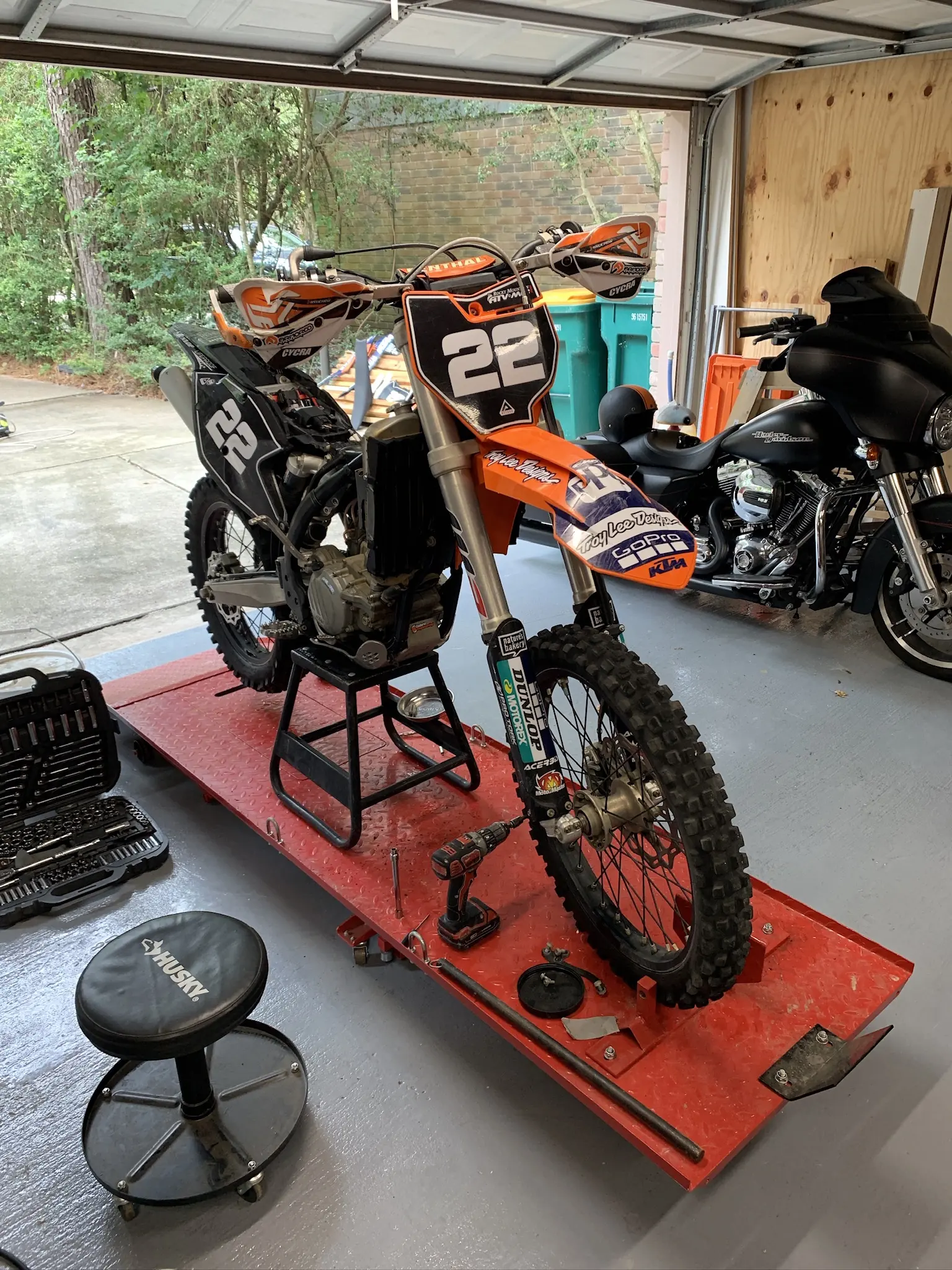
If your front fender doesn’t line up with the front tire after a crash, or the fork suddenly feels stiff and slow, the fork legs have most likely shifted in the triple clamps or on the axle. That’s called a twisted or binding fork, and it hurts how the suspension works.
The fix is free and quick, and the same routine works after a tip-over, after a front tire change, and after any fork service. Here’s how to spot the problem and the six steps I follow to fix it.
This post contains affiliate links. As an Amazon Associate I earn from qualifying purchases, at no extra cost to you.

What twisted or binding forks are
The fork legs are held in the upper and lower triple clamps, and at the bottom they clamp onto the front axle with pinch bolts. A drop or a hard hit that snaps the front wheel sideways can make the legs shift slightly in the clamps or slide sideways on the axle. The two legs are then no longer parallel, and the inner tube drags inside the outer tube. That friction is what riders call binding or twisted forks.
There are two common causes:
- Crashes and drops. By far the most common cause.
- Wrong installation. Bolts tightened in the wrong order or over-torqued after a tire change or a fork oil service. Over-tightening the lower triple clamp is the worst, because it squeezes the outer tube onto the moving parts inside.
Left alone, a binding fork works poorly and can damage suspension parts over time.
How to tell if your forks are out of alignment
- Check the bars first. After a crash the bike often feels “off” right away. Rule out a bent handlebar.
- Check the fender against the wheel. Look down over the fender from the seat, or stand in front of the bike on the stand. If the fender is clearly angled to the wheel and the fender itself is not damaged, the forks have moved.
- Feel the fork. If the front end is suddenly stiffer or slower to move after a crash or a service, the forks are likely binding.
How to align dirt bike forks in 6 steps
No special skills needed, and you can do it trailside with normal tools. A torque wrench is strongly recommended for the last step. Plan on about 15 minutes.
1. Put the bike on a stand
Center the bike on a stand so the front end isn’t carrying much weight.
2. Loosen the lower triple clamp bolts

Loosen the lower triple clamp bolts on both fork legs, about halfway out. If the forks are twisted you’ll often hear cracking or clicking as the bolts let go. That’s tension releasing, and a sure sign the legs were out of line.
3. Loosen the axle pinch bolts

Loosen the front axle pinch bolts (also called crimp bolts) halfway out. They hold the fork legs sideways on the axle, and a side hit can push a leg slightly in or out.
4. Pump the forks
Take the bike off the stand. Stand beside it, hold the front brake and push the front end down hard. Repeat several times. Each stroke lets the legs settle square in the clamps and slide to a neutral spot on the axle.
5. Center the wheel and caliper
Lift the bike back onto the stand gently, without knocking the front wheel around, so the front wheel is off the ground. If your stand doesn’t lift the front, push a wrench under the front of the skid plate. Spin the front wheel as hard as you can and snap the front brake on. This lines up the caliper so it doesn’t bind against the fork movement.
6. Torque the bolts in order
Tighten the axle pinch bolts first, then the lower triple clamp bolts, both to the torque in your owner’s manual. Use a torque wrench: over-tightened clamps make the fork stick and can damage the fork tubes.
Use the same routine any time the front wheel or forks come off, for example after a tire change or when you adjust fork height.
My pick
Click-type torque wrench
Triple clamp and axle bolts need correct torque; too tight and the fork binds. You set the value by twisting the handle.
Beginner setup
A straight, free-moving fork is the base for every other suspension adjustment in my beginner setup path.
FAQ
How do you align motorcycle forks?
Loosen the lower triple clamp bolts and the axle pinch bolts, pump the forks several times with the front brake on, spin the wheel and snap the brake, then torque the axle pinch bolts and the lower clamp bolts to spec.
How do I know if my forks are twisted?
The front fender sits at an angle to the wheel, or the fork feels stiffer and slower than before a crash or a service. You may also hear clicks when you loosen the lower clamp bolts.
Can you straighten motorcycle forks yourself?
Yes, if they have only twisted in the clamps or shifted on the axle: the 6 steps above fix that in about 15 minutes. This procedure re-seats the legs; it does not fix a bent fork tube.
How do you adjust dirt bike forks after removing the front wheel?
Install the wheel, then follow the same routine: pump the forks with the pinch bolts loose, center the caliper by spinning the wheel and braking, and torque the axle pinch bolts and lower clamp bolts to spec.
