
 By
The short answer
To static balance a dirt bike, stand on the pegs on the balls of your feet, knees and elbows slightly bent, upper body leaned slightly forward, and look far ahead. Learn it in steps: on a center stand, then with the front wheel against a tree or rock, then free balancing with the bars turned. Beginners usually last about 5 seconds; 30 seconds or more is a good result.
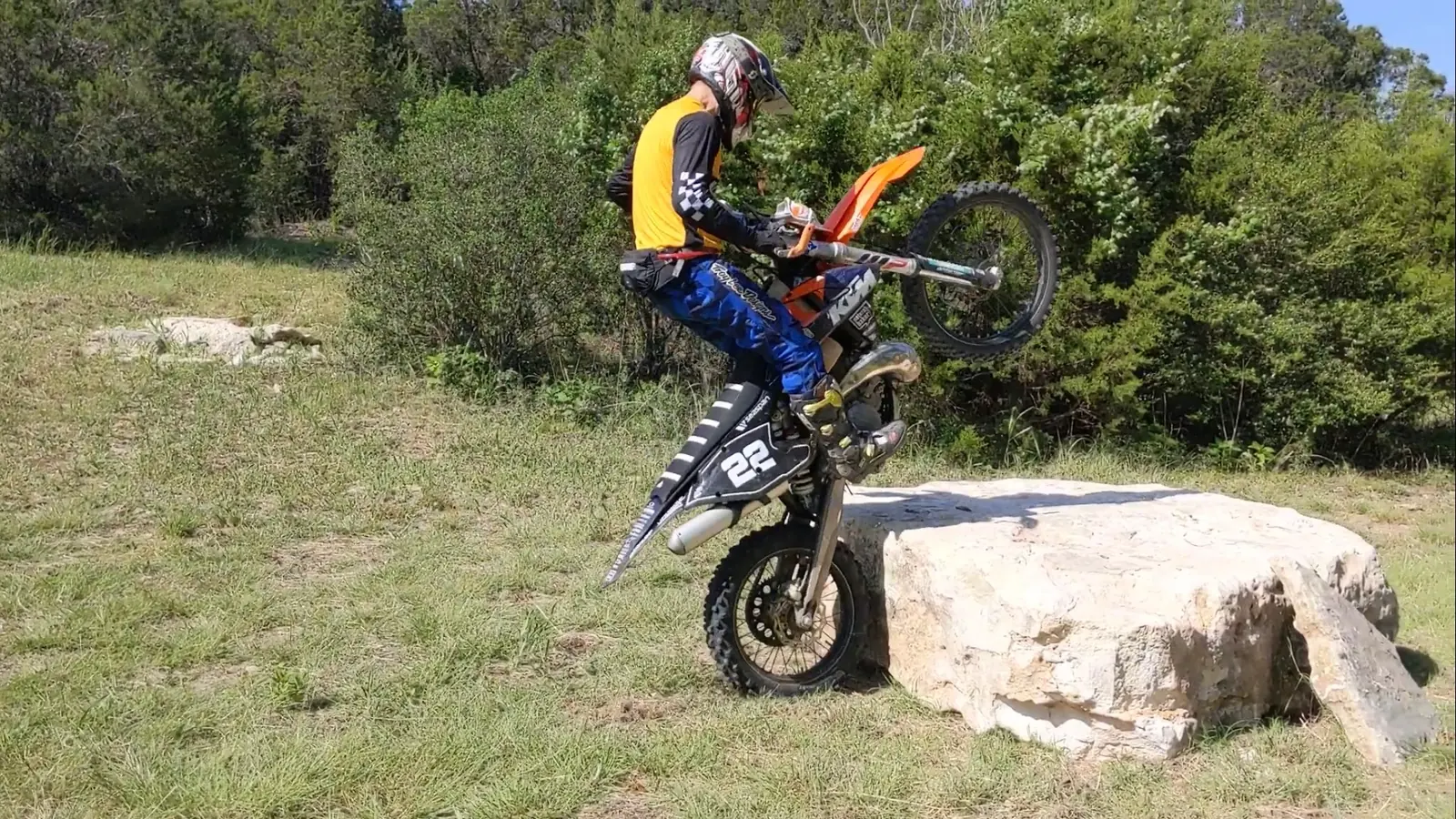
Static balance is holding your position on the bike when it’s stopped or barely moving. It’s what lets you creep up to a log, pause on a rock ledge or wait for the line to clear without dabbing a foot. Good static balance makes slow, technical trail riding and most obstacles a lot easier.
These are the five drills I use, on and off the bike. They’re short enough to fit into a warm-up, and if you do them every ride, you’ll notice a difference within a few weeks.

How to static balance a dirt bike
Balance comes from body position and weight distribution. Keep your weight centered over the pegs so the bike’s front and rear are equally loaded:
- Stand on the pegs with the balls of your feet.
- Knees slightly bent, elbows unlocked.
- Upper body leaned slightly forward, back slightly curved.
- Look far ahead, not down at the front wheel.
- Make small weight shifts side to side to correct, not big ones.
That’s your neutral standing position. Every drill below starts from it.
1. Center stand drill
Put the bike on a center stand on firm, level ground, with the stand under the middle of the bike near the foot pegs. Gear up and climb on.

Find your neutral standing position and feel how centered balance feels: front and rear equally weighted, arms and legs slightly bent, eyes up. It’s a good way to reset your body position at the start of every ride day or while the bike warms up. Some beginners find climbing onto a bike on a stand hard at first, but it should quickly get easy.

2. Front wheel against an obstacle
This is the stepping stone to free balancing. It works on a dirt bike, trials bike, mountain bike or any bicycle; if it’s hard on the dirt bike at first, start on a bicycle.

- Find a solid obstacle on level or slightly downhill ground: a big rock or a tree at least a foot tall, so the center of the front wheel pushes against it, and stable enough that it won’t move.
- Put the front wheel firmly against it. Engine running: slip the clutch to keep light pressure against it. Engine off: push the bike into it and hold at least the rear brake.
- Stand up slowly into your neutral position, using your arms to stabilize the bike. Shift onto the right leg slowly and keep looking ahead. Small movements are easier to control.
- Hold it. Try to stay up longer each time. About 5 seconds is typical for beginners; 30 seconds or more is good.


Make it easier or harder:
- Struggling to get up? Put a center stand next to your left leg to lean on, stand up, then move the left foot onto the peg.
- Once you can hold 30 seconds, rock your weight forward and back from center.
- Ride slowly into the obstacle instead of starting against it. Hold the front tire against it by dragging the clutch, then push down on the forks and use the rebound to roll back off it. Repeat.
3. Free balancing
When you can hold 30 seconds against an obstacle, try it with nothing in front of the wheel. This is the drill that transforms slow technical riding.

- Start on level ground or a slight incline. Turn the bars all the way to the left, put your left foot down and lock both brakes.
- Find the balance point and stand up slowly, looking far ahead. Use the balls of your feet, use the bars for support and keep your body centered.
- Move the left foot onto the peg and stand fully up.
- Once you can hold it, turn the bars side to side and keep balancing.
A grassy field and low tire pressure help while you learn. A center stand next to your left leg helps here too. Once it clicks, slow-ride into a stop and balance as long as you can. You can practice that every time you stop on the trail.
4. Practice on a bicycle
A bicycle is lighter and lower, so balancing is easier, and you can practice anywhere without gearing up or going to the track. The same progression applies: start with a helper holding your front tire, then an obstacle, then free balancing.

5. Stand on one leg while gearing up
The easiest drill of all: put your socks, boots and other gear on standing on one leg. It sounds easy; it isn’t. A few old-timers once told me that doing this every morning improves your balance within the first week, and it keeps improving if you stay consistent. I can testify to that.
Beginner setup
Balance drills pair with the basics of body position and bike setup on the beginner path.
Related: single track riding tips for beginners, setting up suspension for trail riding and how to ride a clutch dirt bike.
FAQ
How do you balance on a dirt bike?
Stand on the balls of your feet with knees and elbows slightly bent, lean slightly forward, keep your weight centered and look far ahead. Correct with small weight shifts.
What are good dirt bike balance drills?
The center stand drill, balancing with the front wheel against a tree or rock, free balancing with the bars turned, the same drills on a bicycle, and standing on one leg while you put on your gear.
Why is static balance important in dirt bike riding?
It lets you go slow over logs, rocks and ledges with control, improves overall bike control and confidence, and is the base for wheelies, stoppies and attacking obstacles.
Are static balance drills good for beginners?
Yes. Start on a center stand or a bicycle, then move to the obstacle drill and free balancing. Advanced riders can add weight shifts and riding into the obstacle.
