
 By
The short answer
Race Tech gold valves replace your fork or shock’s stock piston with a better-flowing piston and a shim stack calculated for your weight, riding style and skill. On my 2023 KTM 300 XC-W’s WP XPLOR forks, they made the front plusher on top, more stable at speed and much harder to bottom. The fork kit cost about $300–450 for both legs at time of writing, and I think it’s worth it, especially if you can install it yourself.
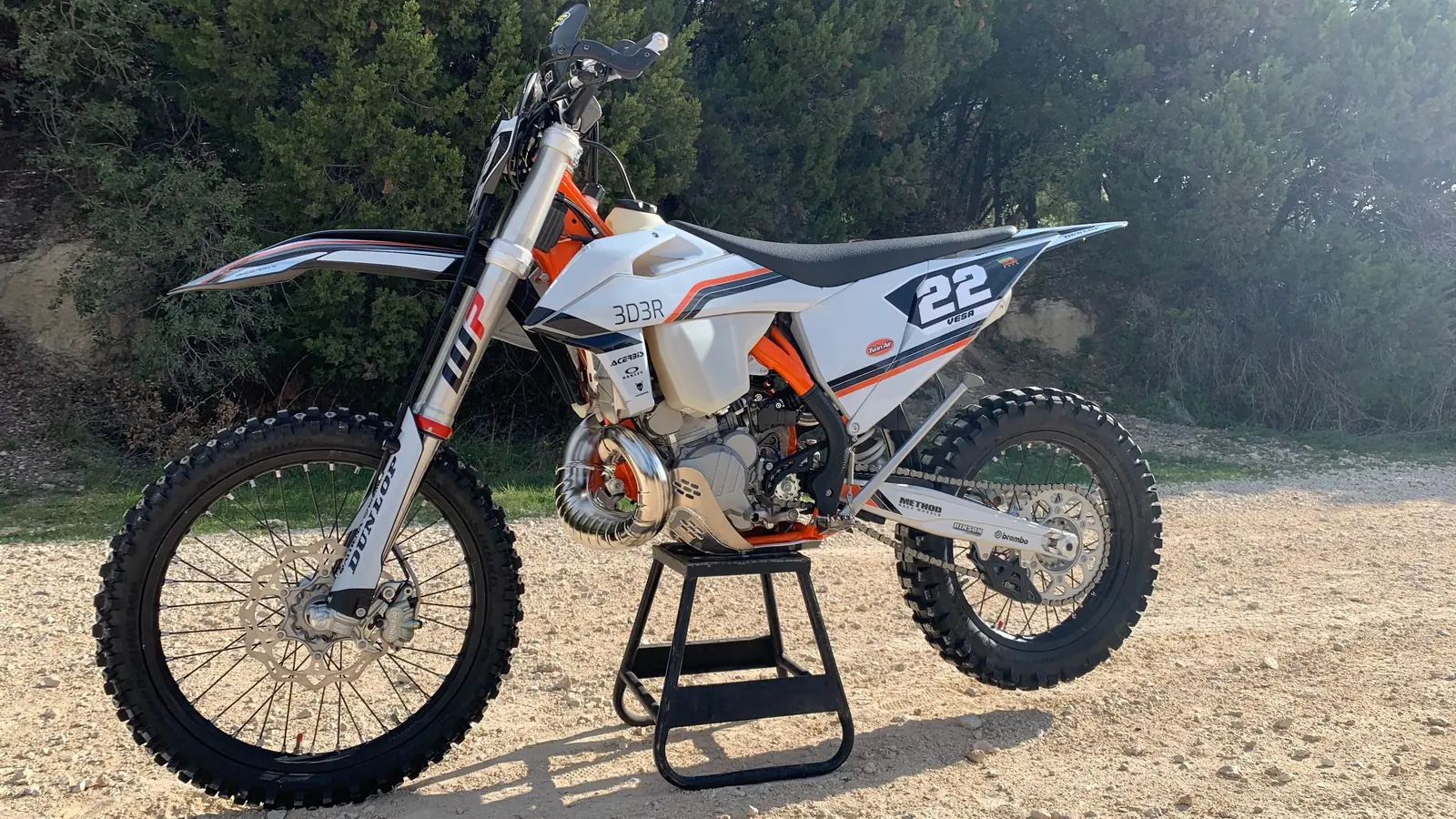
Stock forks on most dirt bikes are under-damped for hard off-road riding. They feel harsh in rocks and roots, dive under braking and get nervous at speed. Revalving fixes that, and the Race Tech gold valve kit is one of the most popular ways to do it.
I installed the gold valve fork kit on the stock WP XPLOR open cartridge forks of my 2023 KTM 300 XC-W, set up for a 170 lb rider with Race Tech’s racer setting. Below: what gold valves are, how the shim stacks and DVS tool work, the install steps, and what changed on the trail.
This post contains affiliate links. As an Amazon Associate I earn from qualifying purchases, at no extra cost to you.

What Race Tech gold valves are
Race Tech makes suspension parts for dirt bikes, street bikes, ATVs and UTVs. The gold valve is a replacement piston for the fork or shock damper. It has a better-flowing design and takes a custom shim stack, so the damping can be built around you instead of an average rider.
Fork kits and shock kits are sold separately, and Race Tech offers different kit types for different suspension designs. Use the Race Tech vehicle search to find the exact kit for your make, model and year. Each kit includes the parts and instructions.
Gold valves vs stock suspension
Many stock forks, including the WP XPLOR, split the work: one leg handles compression damping and the other handles rebound. That asymmetric setup isn’t ideal. The Race Tech kit converts both legs to compression and rebound damping, which noticeably improves stability, and both legs then have compression and rebound adjustment.
- Better, more consistent damping
- More bottoming resistance
- Larger oil flow area, and less harshness on the rear shock
- Damping calculated for your weight, style and skill
Shim stacks and the DVS tool
A shim stack is a series of thin metal discs stacked on the piston. Their thickness and arrangement decide how much oil flows through the valve and how much damping force it makes. Buying the kit gives you access to Race Tech’s Digital Valving Search (DVS) tool. You enter rider weight, riding style, skill level and other parameters, and it lists the exact shims for each stack. That makes the build straightforward.


How to install gold valves in the forks
Have the right fork tools ready and follow the kit’s instructions; the details vary by bike and kit. The basic steps:
- Remove the forks from the bike and drain the oil.
- Disassemble the forks and remove the stock valve assembly.
- Clean and inspect all parts.
- Build the shim stacks from your DVS sheet and install the gold valve in place of the stock assembly.
- Reassemble the forks and refill with oil to the recommended level.
- Reinstall the forks and test ride.
If you’re not sure about any step, have a suspension shop do it. Most shops can fit the kit during a fork oil service or rebuild. My fork rebuild guide covers the teardown and oil.
Trail test: what changed
I installed the valves the day before and took the bike to my local dirt track for a first tuning and test session.
- Plusher on top. I could feel it even pushing the bike around the parking lot and loading it.
- Soft and firm at once. On the trail the front rides higher and dives less under braking and in corners.
- High-speed stability. The stock forks got unstable at speed and handled rubble, rocks and roots poorly. With more rebound damping and symmetric damping, that feeling was gone.
- Progressive compression. Plush at the top, good through the middle stroke and still resists bottoming.
- Clickers that matter. Each click has a noticeable, intuitive effect, and I could feel the front better without losing precise steering.
Review summary: are gold valves worth it?
| Feature | Rating |
|---|---|
| Price (self-installed) | 5 / 5 |
| Performance | 5 / 5 |
| Ease of installation | 3 / 5 |
| Overall | 4.33 / 5 |
Pros: great performance in most trail conditions, adjustability, big bottoming resistance, plush and comfortable, resists deflection, and both fork legs get compression and rebound damping.
Cons: installing it yourself takes skill, and the total price goes up if a shop does the work (still worth it).
What I use
Race Tech gold valve fork kit
The kit in my KTM 300 XC-W’s XPLOR forks; about $300–450 for both legs at time of writing. Check the exact fitment for your forks.
Hard enduro setup
Inspecting and tuning the suspension is a core step in a hard enduro build; the hub lists the rest in order.
Related: dirt bike suspension setup for trail riding, my 2023 KTM 300 XC-W trail test and how to rebuild dirt bike forks.
FAQ
What do Race Tech gold valves do?
They replace the stock damper piston with a better-flowing gold valve and a custom shim stack. The result is more consistent, more adjustable damping and more bottoming resistance.
Are Race Tech gold valves worth it?
Yes, in my experience on the 2023 KTM 300 XC-W: plusher on top, more stable at speed and harder to bottom. They’re best value if you install them yourself; a shop install adds cost.
Which gold valve kit do I need, for example a Type 3 fork compression kit?
It depends on your fork or shock. Race Tech sells several kit types for different suspension designs, so use the Race Tech vehicle search to find the exact kit for your make, model and year.
How do you install Race Tech gold valves?
Remove and drain the forks, take out the stock valve, build the shim stacks from your DVS sheet, install the gold valve, refill the oil and reinstall. A suspension shop can do it during a fork service.
What is the HFR rebound valve?
It’s the race version of Race Tech’s rebound gold valve, designed specifically for racing.
