
 By
The short answer
A dirt bike overheats when it works hard with little airflow: slow technical sections, mud, getting stuck, lots of revs and clutch slip. Steam, coolant out of the overflow and a hot, burnt-coolant smell are the signs. A radiator fan switches on automatically at a set temperature and pulls air through the radiator when you’re barely moving. If you ride slow technical trail or hard enduro, fit one; on newer KTM and Husqvarna TPI models it plugs straight into the existing wiring.
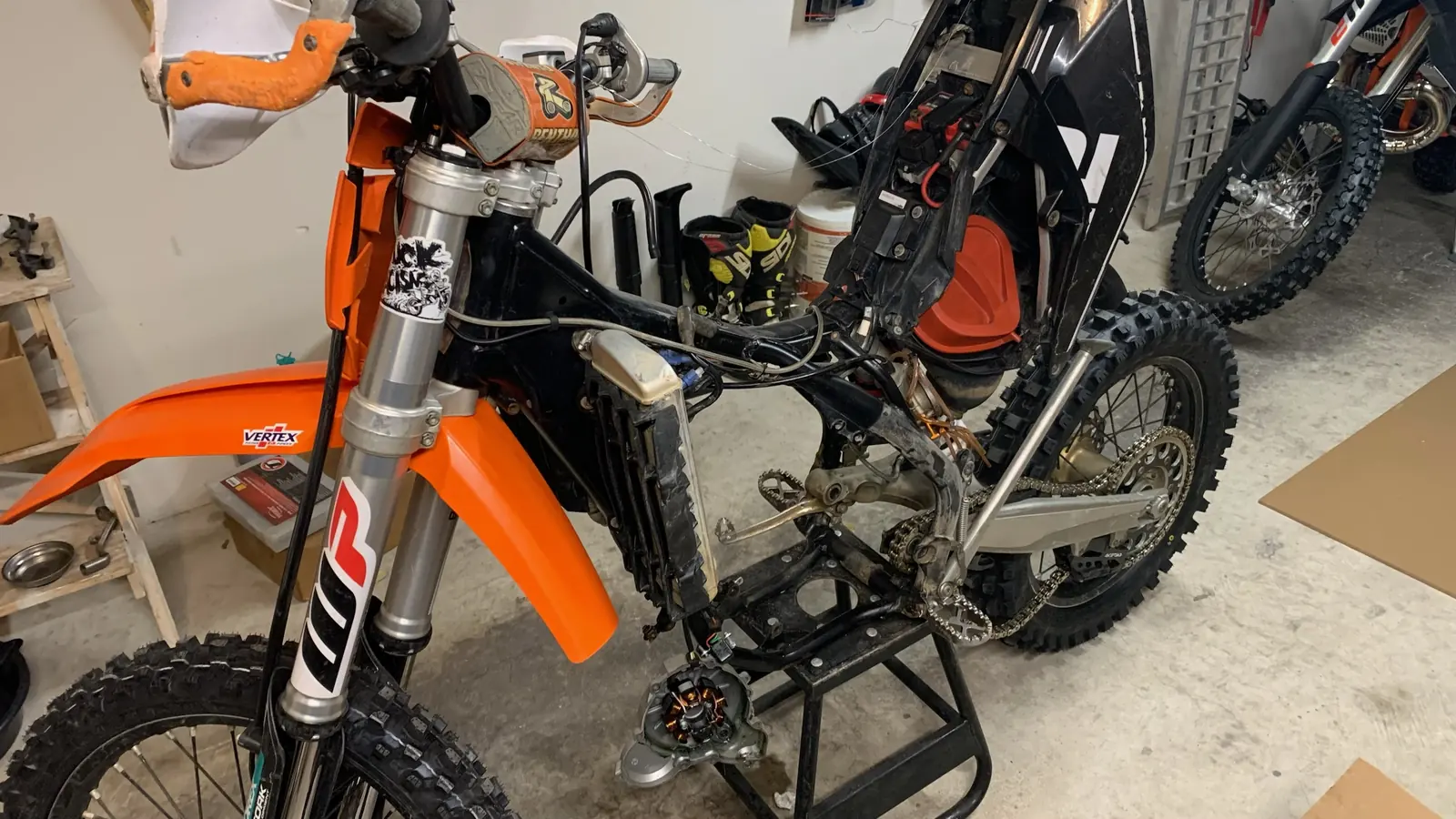
Ever seen a puff of white steam from the radiator cap or under the bike, or smelled hot coolant around the engine? That’s your engine overheating and boiling coolant out through the overflow hose.
Here’s why it happens, what it does to the engine, how to tell if you need a fan, and which fan kits to look at.
This post contains affiliate links. As an Amazon Associate I earn from qualifying purchases, at no extra cost to you.

How a dirt bike cooling system and fan work
Liquid-cooled dirt bikes circulate coolant through the engine block, around the piston and top end. The water pump sends the hot coolant to the two radiators at the front of the bike, where air passing through the thin fins cools it down.
Airflow is the key. In slow, stop-and-go technical riding there is almost none, and at the same time you’re using more revs and more clutch slip to get over obstacles or unstuck. That’s when the engine heats up.
A radiator fan is an electric fan on the inside of the right radiator that forces air through it. It switches on automatically at a set temperature and keeps the coolant at an acceptable level.
Signs your dirt bike is overheating
- Steam from the radiators, often with a hissing sound
- Coolant coming out of the overflow hose
- Extremely hot air around the engine
- A smell of burning coolant
- A hotter-than-normal cylinder
- Loss of power or a knocking engine
- Oil leaking from the seals
- In the worst case, a seized engine that won’t start or run
What happens when a dirt bike overheats
Excess heat makes the oil work less efficiently and expands the metal parts, which adds friction. The coolant starts to boil, the vapor pushes open the pressure-sensitive radiator cap, and hot coolant escapes through the overflow hose to the ground. At these temperatures you risk permanent damage, including a seizure: the piston expands in the cylinder until friction locks it.
What to do after you boil the coolant
- Let the engine cool before you touch the radiator cap.
- Inspect the coolant lines and radiators for leaks.
- Top up with fresh coolant, or better, flush the system and bleed the air out.
Do you need a radiator fan?
Have you boiled the coolant recently? That’s your answer: the engine is running too hot for how you ride. A fan makes sense if your riding includes hard, slow technical sections: low-speed obstacles, mud pits, getting stuck and several attempts at the same climb. In those conditions the radiators don’t get enough air to keep the coolant cool, and a fan fixes it over time with no maintenance or tinkering.
If you mostly ride faster, flowing trail with steady airflow, you probably don’t need one.
Radiator fan kit options
| Type | How it connects | Best for |
|---|---|---|
| Model-specific kit | Fits the radiator frame and plugs into the existing harness, usually under the tank or seat | A perfect fit on most bikes |
| ECU-controlled OEM kit | Plugs into an existing connector; the ECU switches the fan on and off | Most KTM and Husqvarna TPI models from 2020 on |
| Universal kit | Mounts to the radiator; needs some wiring to a power source; usually has its own temperature sensor and display | Older or less common bikes |
Kits include at least the fan and mounting brackets. Universal kits usually add a temperature sensor, a display with control settings and the wiring. For newer TPI bikes, stick with the model-specific kit, because it uses the existing harness and ECU. Your dealer can also fit one on a new bike.
My pick
KTM / Husqvarna radiator fan kit
ECU-controlled and plugs into the existing wiring on newer KTM and Husqvarna models. Check fitment for your model first.
My pick
Trail Tech radiator fan kit
Universal kit that fits most bikes, with higher quality than the Tusk.
Budget pick
Tusk digital radiator fan kit
Universal and reliable; fits most dirt bikes with some wiring work.
Hard enduro setup
Slow, technical riding is where engines cook, so a fan is one of the hard enduro setup steps; the hub lists the rest.
Related: dirt bike coolant replacement, radiator guards and how to remove a dirt bike gas tank.
FAQ
Why is my dirt bike overheating?
Usually low airflow combined with hard work: slow technical riding, mud, getting stuck, high revs and lots of clutch slip. Low or old coolant and damaged radiator fins make it worse.
How do I know if my dirt bike is overheating?
Steam or hissing from the radiators, coolant out of the overflow hose, a burnt-coolant smell and very hot air around the engine. Loss of power or knocking means stop and let it cool.
Do dirt bikes have radiators?
Liquid-cooled dirt bikes have two radiators at the front, one on each side, that cool the coolant pumped through the engine. Air-cooled bikes don’t.
Is a dirt bike radiator fan kit worth it?
Yes, if you ride slow technical trail or hard enduro and have boiled coolant before. Kits are easy to install and need no maintenance.
