
 By
The short answer
Arm pump is forearm pain, tightness and weakness that builds while you ride because blood flows into gripping muscles faster than it can drain out. It mostly comes from gripping too hard, so the fix is to ride relaxed: grip the bike with your knees, set up your bars, levers and suspension so you don’t fight the bike, warm up 10 to 20 minutes, stay hydrated and ride often. Surgery (fasciotomy) is reserved for severe cases that nothing else fixes.
This post contains affiliate links. As an Amazon Associate I earn from qualifying purchases, at no extra cost to you.

Arm pump hits fast: your forearms go rock hard, your fingers lock around the grips and you can’t work the clutch or front brake properly. At speed, that can put you on the ground.
I’ve been riding and racing for 30 years, mostly in Texas. I still get arm pump on the first ride after a long break, and these are the fixes that keep it in check for me.
Below: what arm pump is, why riders get it, 11 fixes, and what arm pump surgery involves.
This post contains affiliate links. If you buy through them I may earn a commission at no extra cost to you. As an Amazon Associate I earn from qualifying purchases.
What is arm pump?
Arm pump (also called forearm pump) is blood building up in the forearm muscles, causing swelling, pain and loss of grip. The chronic form is known medically as chronic exertional compartment syndrome (CECS) of the forearm. Its exact causes aren’t fully understood, and it also shows up in mountain biking, climbing, rowing and other grip-heavy sports.
Typical symptoms are isolated to the forearms while the rest of your body feels fine:
- Forearms that feel hard, tight and “about to explode”
- Pain and strong fatigue in the forearms, wrists and hands
- Numbness, tingling or cramping
- Weak, clumsy fingers that lock around the grips
What causes arm pump on a dirt bike?
Gripping the bars increases blood flow into the forearm muscles, but muscles that stay contracted squeeze the veins that carry blood back out. The muscles swell until they hit the fascia, the tough tissue wrapped around them. Pressure rises, flow gets even more restricted, and the forearm goes rock hard.
On a dirt bike the main triggers are a hard grip, vibration and a lot of wrist movement, made worse by muscles that aren’t conditioned for the job. That’s why it hits three groups most:
- Beginners: their forearms haven’t adapted yet, and they tend to hang on with a death grip.
- Riders coming back from a break or injury: the conditioning they had is gone.
- Experienced riders doing more than usual: longer, more frequent or harder rides than their arms are used to.
Is it dangerous? Ordinary arm pump is common, pro riders get it too, and it fades once you stop. The real danger is on the bike: if you can’t squeeze the brake or clutch, you can’t control the bike at speed.
See a doctor if your forearms stay hard, numb or weak long after riding, if the pain keeps getting worse, or if pump arrives within minutes every ride despite the fixes below.
How to prevent arm pump: 11 fixes
Work through all four groups. Fixing only your setup or only your fitness usually helps, but rarely makes arm pump go away.
Bike setup
- Tweak your bars, levers and grips. Wrong bar height, reach or lever position makes you grip harder. Try moving the bars forward or back, raising them if you’re tall, and adjusting lever angle and reach. See my guides to handlebar setup and lever position. Softer grips and grip donuts can also help.
- Soften the suspension. Harsh suspension beats you up and makes you hang on tighter. Back out the compression and rebound clickers a couple of clicks at a time so the suspension moves more freely. More in how to set up dirt bike suspension for trail riding.
- Make the clutch pull light. If arm pump hits your left arm first, suspect the clutch. On a hydraulic clutch, flush and bleed the fluid, and rebuild the master or slave cylinder if it leaks. On a cable clutch, inspect the cable, then lubricate or replace it. Then fine-tune the clutch lever position; small changes make a big difference.
- Stop sliding on the seat. Sliding back under acceleration or around in corners makes you pull on the bars. Pants that are too big, especially in the crotch, let you move around inside them; tighter-fitting pants help. A gripper seat cover with ribs keeps you planted. See my tips for choosing a dirt bike seat and seat cover.
- Wear gear that doesn’t squeeze your arms. Leave glove straps loose or open. Gloves that are too big cause more problems than snug ones; try more or less palm padding. Long elbow guards that clamp the forearm are a common culprit. A tight jersey, backpack, hydration pack or chest protector around the armpits can also restrict flow. More in essential dirt bike gear for trail riding.

Fitness and recovery
- Ride regularly, exercise and stretch. Riding is the best conditioning. When pump starts mid-ride, slow down but keep riding for a bit; you’ll last longer each time. If the pain gets worse, stop, and if it keeps getting worse, take a few days off. Off the bike:
- Cardio, ideally using your arms (swimming, rowing, elliptical), builds more capillaries in the arm muscles so blood moves through them more easily.
- Climbing is an isometric hold, much like gripping a dirt bike.
- Light weights only. Skip bulk-building and max-strength arm and chest work; focus on core and legs. Bigger forearm muscles can make pump worse, which is why many pros avoid them.
- Stretch forearms, fingers and palms before and after a ride day and the day after.
- Hydrate and eat for blood flow. Poorly hydrated muscles are stiffer. Drink plenty well before and during the ride, add electrolytes, and carry a hydration pack. Nitrate-rich foods (leafy greens, beetroot, radishes, celery, onion, garlic) help blood vessels dilate. Skip fatty, oily meals like bacon and eggs on ride morning.
- Warm up 10 to 20 minutes. Raise your heart rate gradually with stretching, a short run or a slow sighting lap. Or warm up on the bike around the parking lot: slow figure eights standing without dabbing, small controlled wheelies, static balance drills and pivot turns (lift the front and turn 90 to 180 degrees). Stop often and relax your hands.
- Cool down and recover. If you get pump often, cooling down matters as much as warming up. Ice on the forearms can reduce swelling, including between rides. Massage helps some riders and makes it worse for others; if it works for you, push toward the heart.

Riding technique
- Fix your riding position. Notice when pump starts: right away or late, one arm or both? Put the bike on a stand, practice your forward seated and centered standing positions, and take a photo to check your posture.
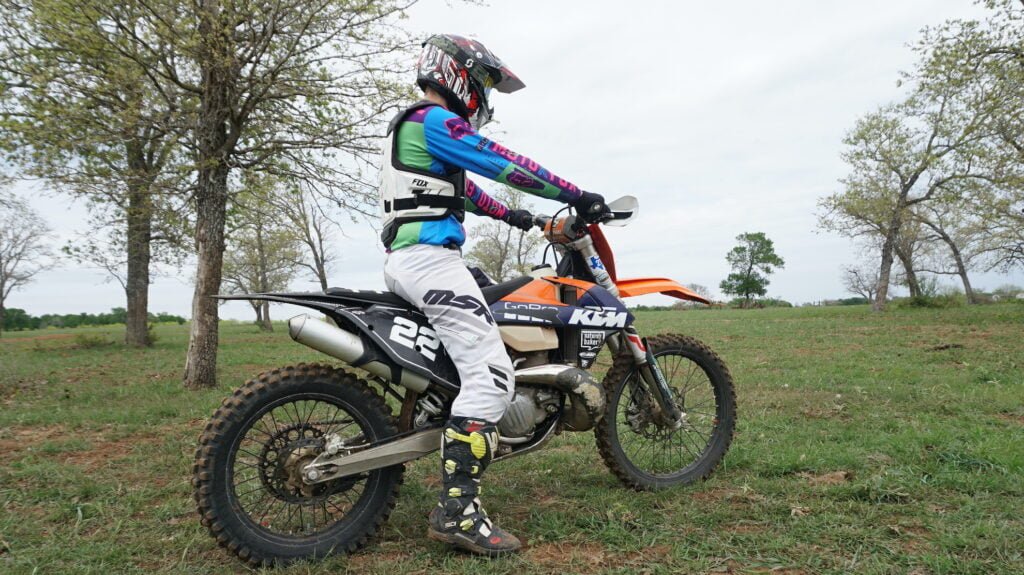
- Ride relaxed. A death grip is the fastest route to arm pump. Grip the bike with your knees, lean into it so less weight goes through your arms, and let your hands go light. When pump sets in, slow down for a minute and ride as smoothly as you can with soft hands. Once it eases, you’ve found the grip that works; keep it and add speed slowly.

What is arm pump surgery?
Some riders have severe arm pump that nothing relieves. For them, the last option is surgery, called a fasciotomy or fasciectomy. The surgeon splits or removes the fascia around the forearm muscles, so the muscles have room to swell without squeezing the blood vessels.
- It’s usually done under general anesthetic. Afterwards the arm is bandaged (no splint) and rested, followed by active mobility exercises.
- Most riders are back on the bike four to six weeks after surgery.
- It’s popular with professional motocross racers, and successful outcomes are reported in 80 to 90% of cases.
It’s still surgery. Consider it only with a doctor’s advice, after you’ve worked through the fixes above.
My pick
Pro Taper Clamp-On Pillow Top Grips
A softer grip that soaks up vibration and cushions impacts, so you can hold on with less force.
My pick
Pro Taper Grip Donuts
Comfortable under the hand and they help prevent thumb blisters. Try riding with and without them.
My pick
Nuun electrolyte tablets
Drop them in your water bottle or hydration pack to replace salts and ride longer without fatigue.
Related: how to prevent carpal tunnel when riding, what a Rekluse clutch does and single track riding tips for beginners.
Beginner setup
Bars, levers, suspension and seat all play into arm pump; my beginner path sets each one up in order.
FAQ
What is arm pump surgery?
Arm pump surgery (fasciotomy or fasciectomy) splits or removes the fascia around the forearm muscles so they can swell without choking blood flow. Most riders are back on the bike in four to six weeks, and success is reported in 80 to 90% of cases.
How do you get rid of arm pump while riding?
Slow down for a minute, loosen your grip, squeeze the bike with your knees and ride as smoothly as you can. Once the pump eases, keep that light grip and build speed slowly. If the pain keeps getting worse, stop.
What exercises help prevent arm pump?
Riding itself is the best training. Off the bike, cardio that uses your arms (swimming, rowing, elliptical), climbing and forearm stretching help most. Avoid heavy, bulk-building arm workouts.
Is arm pump dangerous?
Ordinary arm pump fades once you stop riding, but it’s dangerous on the bike because you can lose the strength to brake and clutch. See a doctor if your forearms stay numb, hard or weak after riding or the pain keeps getting worse.
