
 By
The short answer
The clutch is the lever on the left side of the handlebar. To ride a clutch dirt bike: pull the clutch in, click down into first gear, add just a little gas (about 5% off idle), then let the lever out slowly until you feel the friction point and hold it there while the bike starts to move. Once you’re rolling, release the lever the rest of the way and add gas. To stop, pull the clutch in and brake. Most people get the basics on the first day.

Clutch control is the first real skill on a dirt bike, and it stays the most important one: every technical move over logs, ledges and rocks uses it. Most beginners stall because they treat the clutch like a switch.
I’ve been riding and racing for 30 years, and these are the drills I’d give any new rider. Below: how the clutch works, a four-step beginner plan, fixes for common problems, and six tips to make your clutch control precise.
How does a clutch work on a dirt bike?
Most adult-size gas dirt bikes have a manual clutch and gearbox. Pull the lever and a cable or hydraulic slave cylinder separates the clutch plates, so the engine stops driving the rear wheel. The further you pull, the more the plates slip; fully in, the engine is disconnected. Let the lever out and the plates clamp together again.
Exceptions: most electric dirt bikes, like the Sur-Ron X, have no clutch lever at all, and an auto clutch like a Rekluse changes how you use it.
Clutch terms you need to know
| Term | What it means |
|---|---|
| Disengaged | Lever pulled in. The engine is disconnected and the bike won’t be driven. |
| Engaged | Lever let out. The clutch connects the engine and drives the bike. |
| Friction point | The zone between where the clutch starts pulling the bike forward and where it stops slipping. Finding it is the key skill. |
| Clutch drag | The bike still creeps forward in gear with the lever pulled all the way in, because the clutch isn’t fully releasing. |
| Neutral | No gear selected. It sits between first and second: first is down, the rest are up. |
Finding neutral: pull the clutch in, push the shifter down into first, then lift it gently with your boot toe to the half-step between first and second.

How to ride a dirt bike with a clutch: beginner steps
- Gear up and find a safe spot. Wear at least the essential dirt bike gear and find an open, level area.
- Dead-engine drill. Engine off, bike on level ground. Left foot on the ground, right foot on the peg ready for the rear brake; short riders can stand the left foot on a rock or log. Rock the bike 1 to 2 feet forward and let it roll back. Now pull the clutch in, push the shifter down into first, and keep rocking. Slowly let the lever out until you feel the drag start to slow the bike. That’s the friction point. Repeat until you find it every time.
- Move the bike with the friction point. Level ground or a slight incline, bike in neutral. Pull the clutch in before you start the engine every time, so the bike can’t jump forward if it’s actually in gear. With the engine idling, pull the clutch in and select first. Without touching the gas, let the lever out slowly to the friction point and stop moving it. Let the bike creep 1 or 2 feet, pull the clutch in and let it roll back, left foot staying planted. Repeat, letting the lever out a little further each time. Take breaks; it tires your fingers.
- Start and stop. In first with the clutch in, add a small amount of gas, about 5% off idle. Let the lever out to the friction point until the bike starts to move, then hold that position: don’t let the lever out further or add more gas yet. After about 10 feet, slowly let the lever out more and add gas, put your left foot on the peg and ride. To stop, pull the clutch all the way in and use the rear and front brakes. If take-off is hard, rock the bike forward and back a couple of times with the clutch and go on the third.


Common beginner clutch problems
- I keep stalling. You don’t need more gas. Let the clutch out slower and hold it at the friction point until the bike is moving. Think of the clutch as a long rubber band, not a switch.
- The bike runs out from under me. Too much gas. Use less gas and more clutch control.
- How much gas is enough? Just enough to hear the revs rise slightly above idle. With good clutch control you barely need any; it’s all clutch.
- The lever is hard to reach or pull. Adjust the lever position and reach, and flush old clutch fluid or lubricate the cable (see below).
- I can’t pull it with one finger. Start with your index and middle fingers and work toward the index finger alone.
- I can’t find neutral. Use your hand on the shifter to feel for the notch between first and second, or rev the engine slightly as you shift.
6 tips for better clutch control
1. Set the clutch lever position and reach
Grabbing the lever with three or four fingers kills precise control. Set the bars and lever to fit you:
- Your index finger reaches the lever easily.
- The clutch is fully disengaged when the lever touches your middle finger.
- Pulled in, the lever barely touches the grip donut area.
- The lever angles only slightly downward.
Step-by-step instructions are in my brake and clutch lever positioning guide and handlebar setup guide.
2. Make the clutch pull light and consistent
The clutch should feel light and consistent all ride. If a hydraulic clutch feels hard, spongy or changes, the fluid likely has air in it or is contaminated: flush and bleed it. On a cable clutch, check the cable and housing for kinks or damage and replace if needed. If the bike has clutch drag, adjust the cable free play or bleed the hydraulic system until the clutch releases fully. Also keep the engine oil at the right level and change it at the manual’s interval: the wet clutch runs in that oil, and old oil changes how the friction point feels.
3. Work toward one-finger clutch
Start with two fingers. Once you’re warmed up, use only your index finger on easy terrain and switch back to two when it gets tired. Over several weeks you’ll use one finger more and more. One finger gives you more precise feedback from the friction point and leaves three fingers on the grip, which also helps with arm pump.
4. Rock the bike on an incline
This is my favorite clutch drill. On a small, smooth incline, plant your left foot next to or slightly ahead of the left peg. Without moving that foot, use the clutch at low revs to ease the bike forward about a foot, then pull the clutch in slightly and let it roll back. Repeat without stalling. The same skill stops you rolling backwards on the trail.
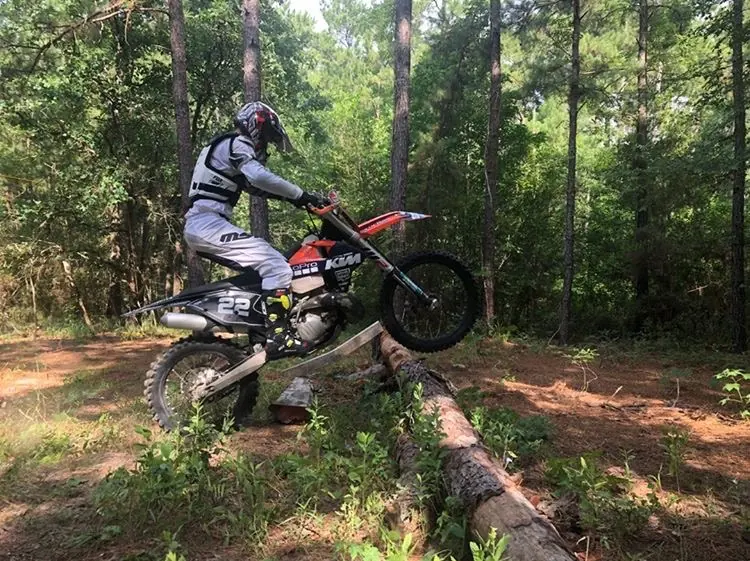
5. Lift the front wheel with the clutch
- Find a 4 to 8 inch (10 to 20 cm) ledge or step-up. Start small.
- Put the front wheel against the edge and hold the front brake the whole time.
- Plant your left foot next to the rear axle and sit far back, almost on the fender.
- With the revs slightly up, let the clutch out a little quicker than in the rocking drill, but not all the way, for a short, controlled burst. Pull it in to drop the front back down.
- Keep your upper body still. The bike should feel like it rotates under you while your arms lift the front.


6. Shift gears at speed
Once you’re comfortable, the clutch becomes an afterthought: it’s mainly for starting, stopping, controlling power over obstacles and preventing stalls. Modern dirt bikes also shift without the clutch at speed: roll off slightly to unload the gearbox, match the revs and shift. Most riders still pull the clutch in a little, but with good timing you don’t need to.
Next: static balance exercises and single track tips.
Beginner setup
Lever position is step one of good clutch control; my beginner path sets up the rest of the bike in order.
FAQ
Where is the clutch on a dirt bike?
The clutch lever is on the left side of the handlebar. The shifter is at your left foot, and the rear brake pedal is at your right foot.
How do you use the clutch on a dirt bike?
Pull it in to start, stop and change gears. To pull away, let it out slowly to the friction point and hold it there until the bike moves, then let it out fully and add gas.
How do you shift gears on a dirt bike with a clutch?
Ease off the gas, pull the clutch in, click the shifter (down for first, up for second and higher) and let the clutch back out as you add gas. Experienced riders often upshift without the clutch.
How long does it take to learn to ride a clutch dirt bike?
Most people can start, ride and stop on the first day. Precise clutch control takes a few weeks of regular practice with drills like rocking on an incline.
