
 By
The short answer
Fork bleeders are small, hollow, spring-loaded valves that replace the air bleed screws on top of your fork caps. Push the button and the air pressure that builds up inside the forks escapes in seconds, so the forks stay plush instead of harsh. Bleed them before every ride, after strapping the bike down and after big temperature or elevation changes. Installing a pair takes about 10 minutes.
This post contains affiliate links. As an Amazon Associate I earn from qualifying purchases, at no extra cost to you.
Air pressure builds up inside coil-spring forks as you ride and as the temperature changes. Too much of it slows the fork down and makes it feel stiff, harsh or slow. Many riders never release it.
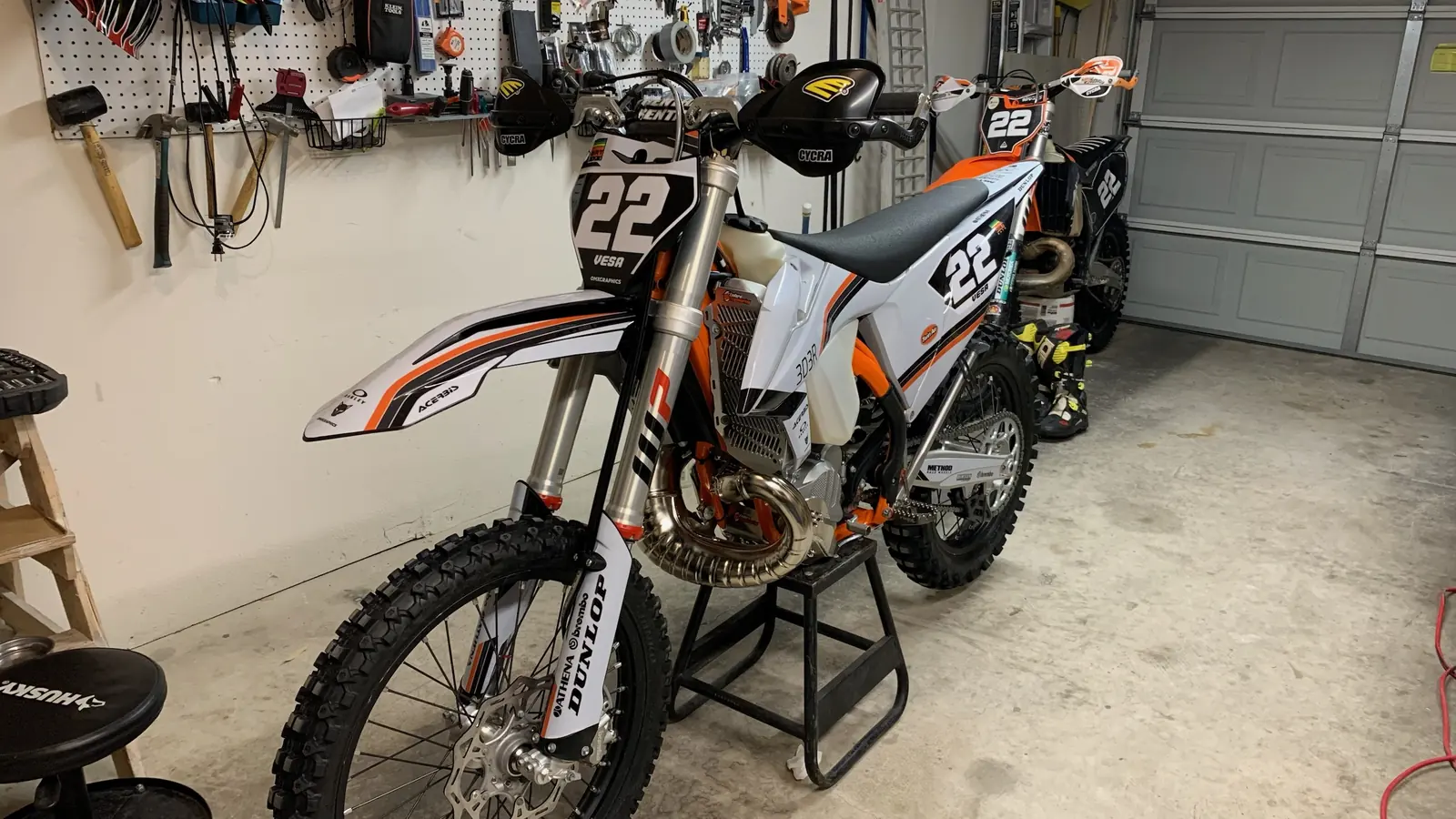
The stock bleed screws need a screwdriver, are fiddly to reach and take time. Quick-release fork bleeders make it a push of a button. I use them on the WP XPLOR forks of my KTM 300. Here’s why the air builds up, when to bleed, and how to install a set.
This post contains affiliate links. As an Amazon Associate I earn from qualifying purchases, at no extra cost to you.

Why air builds up inside the forks
The air inside a fork leg works alongside the oil as part of the suspension. An open cartridge fork typically has about 4″ (10 cm) of air between the oil level and the fork cap. When the fork compresses, that air compresses too, and its pressure affects both compression and rebound speed. Several things raise it:
- Temperature. Air expands when it’s hot and contracts when it’s cold, so the morning-to-afternoon swing alone changes the pressure.
- Heat from riding. The oil and internals heat up, and that heat expands the air further.
- Seals. Small leaks and dirt in the dust and oil seals let a little air in on compression strokes.
- Elevation. Riding at a different altitude than where you last bled the forks changes the pressure difference.
The symptom: the plushness is gone and the fork feels harsh. The fix is to let the extra air out so the inside pressure matches the air around you.

How to bleed the forks
Coil-spring forks with bleed screws: with the bike on a stand and the front wheel off the ground, slowly open the small screw on top of each fork cap. You’ll hear the air hiss out through the threads; you don’t need to remove the screw. When it stops, tighten it back in. The screw has an o-ring and can be under real pressure, so don’t let it fly off. The service manual says to do this before every ride day.
Air forks: there are no bleed screws. You set the pressure with a fork pump instead, and the same principle applies: check it often, because it changes with temperature. Follow your owner’s manual.
With quick-release bleeders, the first case becomes a push of the button on each cap. They’re also sold as speed bleeders or air bleeders.
When to bleed air from your forks
- Before every ride, and whenever the temperature has changed.
- After strapping the bike down. Compressing the front with tie-downs raises fork pressure and can make the seals leak in transport.
- After transport, once you release the straps.
- With elevation changes. Bleed often if you ride big climbs or travel to the mountains.
How to install fork bleeders
Buy bleeders with the right thread size and length for your forks. The WP XPLOR forks on my 2018 KTM 300 XC-W use M4 × 0.7 mm threads. If you’re unsure, measure the stock screw. You don’t need to take the forks off the bike.
- Remove the stock bleed screws from the fork caps. Keep them as spares; quick bleeders can get damaged or broken.
- Grease the o-rings on the new bleeders so the seal isn’t damaged as you tighten.
- Thread the bleeders in and snug them. Don’t over-tighten; the o-ring does the sealing.
- Test on the next ride day. Pumping the forks in the garage won’t build pressure, so it tells you nothing. Push the bleeders before you ride, listen for the hiss, and push again after the first ride.


Bleeders help prevent leaky fork seals
Extra air pressure pushes oil past the seals, especially once dirt has worked under the dust seal. Bleeding regularly takes that pressure off and helps the seals last longer. If a seal does start to weep, cleaning it with a seal tool usually stops minor dirt-related leaks; see how to clean leaking fork seals. If the leak comes back quickly, replace the seals at the next oil service with my fork rebuild guide.
What I use
Motion Pro quick-release fork bleeders
They hold air and don’t leak on my KTM’s XPLOR forks. Check the thread size for your forks.
Beginner setup
Bleeding the forks keeps your suspension setup working as intended; the beginner path covers the rest of the setup in order.
Related: dirt bike suspension setup for trail riding, dirt bike fork height and how to align dirt bike forks.
FAQ
What are fork air bleeders?
Small hollow, spring-loaded valves that replace the bleed screws on the fork caps. Pushing the button releases built-up air pressure from the fork leg without a screwdriver.
What are bleeders on a dirt bike fork for?
They let out the air pressure that builds up inside the forks from heat, temperature, elevation and seal leakage. That pressure makes the fork harsh and can push oil past the seals.
How often should I bleed my forks?
Before every ride, after strapping the bike down or transporting it, and whenever the temperature or elevation changes noticeably.
How do you bleed dirt bike forks?
With the front wheel off the ground, open the bleed screw on each fork cap until the hiss stops, then tighten it; or push the button on quick-release bleeders. Air forks are set with a fork pump instead.
