
 By
The short answer
For a 2-stroke trail bike I recommend Engine Ice (256°F boiling point, premixed, can be topped up with water on the trail). For a hot-running 4-stroke, Evans waterless coolant (375°F boiling point, much less pressure). Change dirt bike coolant every 1 to 2 years or as your manual says: drain it from the lower radiator hose, refill to the top of the radiator fins, bleed the air at the cylinder head screw, then check the level once the engine has cooled.
This post contains affiliate links. As an Amazon Associate I earn from qualifying purchases, at no extra cost to you.

Coolant keeps your engine at a safe temperature. Old or low coolant leads to overheating, boil-overs on slow technical trail, and in the worst case engine damage. Flush it periodically, and always after overheating or a radiator leak.
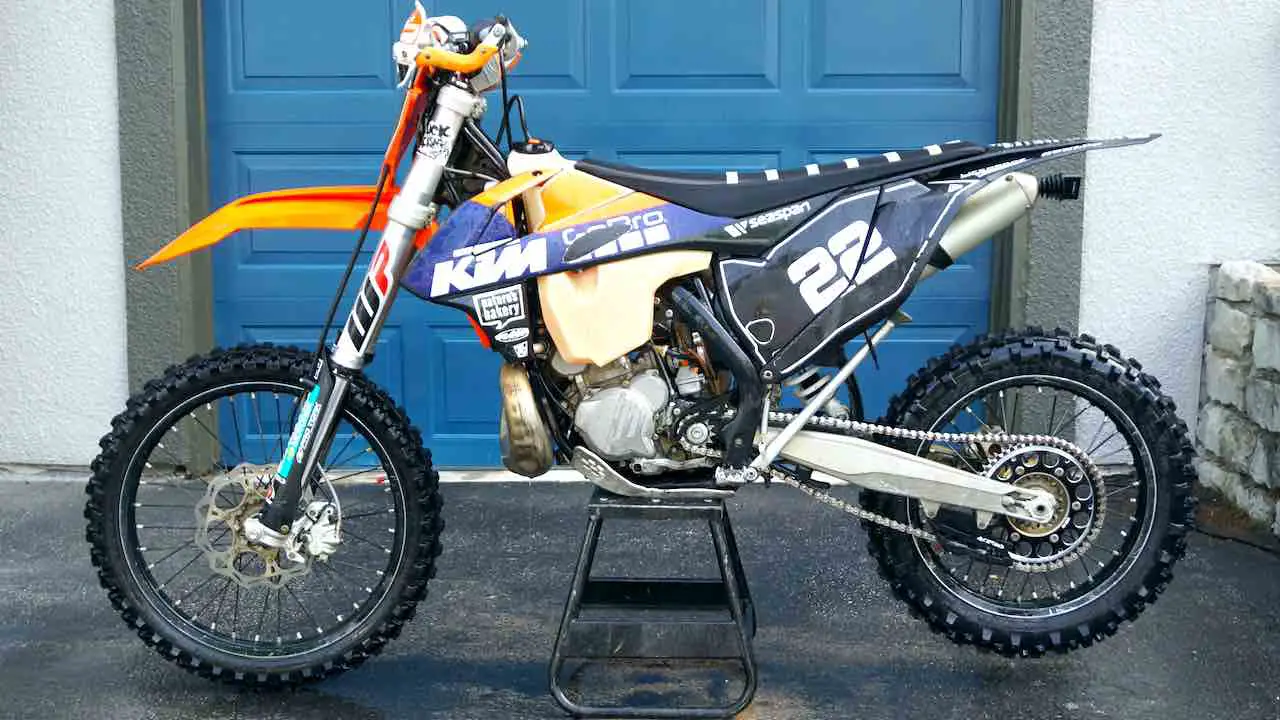
I did this job on my 2018 KTM 300. The job takes less than an hour with ordinary tools. Below is which coolant I’d buy for a 2-stroke and a 4-stroke, and the five steps to drain, refill and bleed the system.
Best coolant for dirt bikes
Coolant protects the motor from freezing and from overheating. These are the three coolants dirt bike riders rate highest. Of these, Engine Ice is the easiest to use in my experience and keeps the bike from overheating very effectively.
| Coolant | Price | Boiling point | Why |
|---|---|---|---|
| Evans Waterless | $$$ | 375°F | No water, much less pressure build-up |
| Engine Ice | $$ | 256°F | Propylene glycol, premixed, biodegradable |
| Maxima Off-Road Coolant | $ | 285°F | Ready to use |
Best coolant for a 2-stroke dirt bike: Engine Ice
Engine Ice is a propylene glycol coolant premixed with distilled (deionized) water, with a 256°F boiling point. Because it already contains water, you can top it up with water if you have to. Most 2-strokes are trail bikes, and if you lose coolant on the trail you can refill from a creek or your hydration pack and keep riding until you can flush the system with fresh coolant.
Best coolant for a 4-stroke dirt bike: Evans
Modern 4-strokes run hot and overheat easily in low-airflow riding like technical trail. Evans has a 375°F boiling point and contains no water, so there’s no water vapor and much less pressure in the system, which is easier on the radiators and hoses. The trade-off: being waterless, it isn’t the coolant to top up with creek water.
Tools you need
- Regular hand tools (a socket for the hose clamp)
- A drain pan to catch the old coolant
- New coolant
- Gloves and eye protection
- Replacement hoses or clamps only if you find a leak
How to change dirt bike coolant in 5 steps
Work on a cold engine. If the bike has been overheating or leaking, use this flush to inspect the whole system too.
1. Clear access to the radiator hoses
For a simple flush you can reach the lower radiator hose without removing the gas tank or the exhaust. If you want to inspect for leaks and bleed the system more easily, remove the gas tank, the side panels and, on a 2-stroke, the head pipe. That’s what I recommend.

2. Drain the old coolant
- Put the drain pan under the bike.
- Loosen the lower hose clamp on the right side of the engine, next to the power valve, and pull the hose. Some models have a drain plug where the lower hose meets the engine.
- Open the fill cap so the coolant drains faster.
- Rock the bike gently left and right to get the last of it out.

The left radiator connects to the right one with a crossover hose, so you don’t need to touch any other hose to drain the system. Old coolant is toxic: dispose of it according to local rules.
3. Refill with new coolant
Reconnect the lower hose and tighten the clamp. Check every hose and clamp for cracks or leaks and replace any that look bad. Then pour the new coolant slowly into the filler until the level reaches the top of the fins inside the radiator.
4. Bleed the air out
Draining lets air into the system, and trapped air causes hot spots. Slowly open the small bleed screw on top of the cylinder head until you hear air hiss out and coolant starts to seep through the threads. Don’t take the screw all the way out, or coolant runs over the engine and makes a smelly mess when it heats up. Close it and keep topping up until the level sits at the top of the fins in the right radiator.

5. Warm it up and recheck the level
Refit the tank and side panels, start the bike and let it warm up while you check for leaks. Let it cool completely, then open the cap and check the level. If you bled it properly, it stays at the top of the fins.
Never open the radiator cap on a hot engine. The coolant is under pressure and will spray out and burn you.
What I use
Engine Ice coolant
Premixed, 256°F boiling point, and you can top it up with water on the trail. My pick for 2-strokes.
My pick
Evans Waterless Coolant
375°F boiling point and much less system pressure, for hot-running 4-strokes.
Budget pick
Maxima Off-Road Coolant
Ready to use and the cheapest of the three.
Beginner setup
Fresh coolant is part of the basic maintenance in the beginner path; the hub lists the rest in order.
Related: how to remove a dirt bike gas tank, how to change a spark plug, mixing 2-stroke oil and dirt bike gear for hot weather.
FAQ
What is the best coolant for a dirt bike?
Engine Ice for 2-stroke trail bikes because it’s premixed and can be topped up with water, and Evans Waterless for hot-running 4-strokes because of its 375°F boiling point. Maxima Off-Road is the budget option.
Can you use car coolant in a dirt bike?
Use the coolant your manufacturer specifies, or one that meets the same specification. The wrong type can cause cooling system problems or damage engine parts.
How often should I change dirt bike coolant?
Every 1 to 2 years, or as your owner’s manual specifies. Flush it sooner if the bike has overheated or had a radiator leak.
Why does dirt bike coolant need replacing?
Coolant carries heat away, lubricates the water pump and prevents corrosion. Old coolant does all three worse, which raises the risk of overheating.
