
 By
The short answer
A dirt bike overheats when it makes more heat than the radiators can shed. The usual causes are low or old coolant, slow riding with little airflow, a lean mixture (jetting, mapping or an air leak), a weak radiator cap, clogged or bent radiators, a dragging clutch, or a failing water pump. Some coolant puking from the overflow on a slow, hot trail is normal. Steam, a sweet smell, pinging or power loss is not. Stop, let it cool with the engine off, check coolant, then fix the cause: a fan, a higher-pressure cap, clean radiators and correct jetting.
This post contains affiliate links. As an Amazon Associate I earn from qualifying purchases, at no extra cost to you.
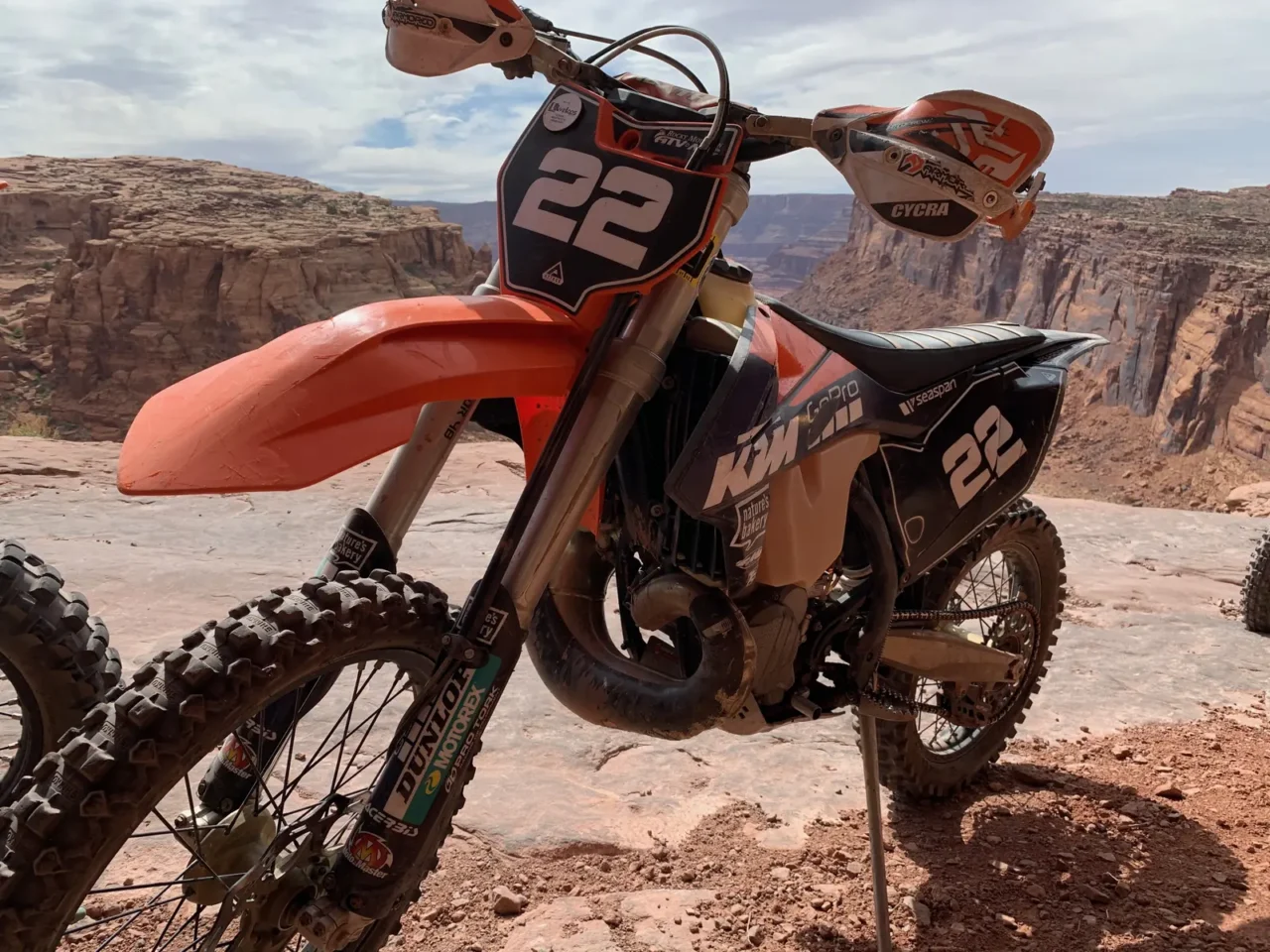
Liquid-cooled dirt bikes are built to cool at speed. Put one in a rock garden at walking pace on a 95°F day and the radiators get almost no air. That’s where most overheating happens, and it’s where I ride most. My 2018 KTM 300 XC-W without a fan boiled over regularly on slow East Texas trails in summer; the 2023 with the fan rarely does.
This guide separates normal from a real problem, lists the causes in the order I’d check them, and gives the fixes that work on the trail and in the garage.
Signs your dirt bike is overheating
- Coolant out of the overflow hose. A little after a long slow section is the system relieving pressure. A steady stream or steam means it’s boiling.
- Steam or a sweet smell from the radiators or the overflow.
- Pinging or detonation (a metallic rattle under load), especially on a 2-stroke.
- Power fades and the engine feels “tight”, or it keeps running (dieseling) after you shut it off.
- The fan runs constantly or a temperature light comes on, on bikes that have them.
- Coolant level keeps dropping between rides with no visible leak: possible head gasket or water pump seal.
What temperature is normal for a dirt bike?
Most liquid-cooled dirt bikes run their coolant around 160–200°F (70–95°C). Under a stock 1.8-bar (about 26 psi) cap, a 50/50 coolant mix doesn’t boil until roughly 260°F (125°C). Fans on KTM and Husqvarna models typically switch on around 200–210°F. Brief spikes in tight terrain are normal. Holding temperature near the boiling point is what damages pistons, gaskets and rings.
Why a dirt bike overheats: causes in the order to check them
| Cause | How to tell | Fix |
|---|---|---|
| Low or old coolant | Level below the radiator core with the engine cold; brown or oily coolant | Top up; flush and refill every season (coolant guide) |
| Slow riding, no airflow | Only boils in tight, technical sections or idling | Radiator fan, shut off when stopped, keep momentum |
| Lean mixture | Pinging, light-gray or white plug, hangs at idle; air leak at intake boot | Richen jetting or map, check intake and reed boots, read the plug |
| Weak radiator cap | Pukes coolant early; cap seal hard or cracked | New cap, or a higher-pressure cap (2.0 bar) |
| Clogged or bent radiators | Mud or grass in the fins, crushed cores after a crash | Wash from the back side, straighten fins, radiator guards |
| Slipping or dragging clutch | Riding the clutch a lot in tech; clutch smells burnt | Adjust, fresh oil, consider an auto clutch |
| Water pump or head gasket | Coolant loss with no leak, milky oil, bubbles in the radiator | Pump seal and impeller, head O-rings: shop job if unsure |
| Wrong premix ratio (2-stroke) | Too little oil adds friction and heat; recently changed oil or ratio | Mix to the manual (premix guide) |
What to do when your dirt bike overheats on the trail
- Stop and shut it off. Idling a hot bike with no airflow only makes it hotter.
- Point it into the wind or into shade and let it sit 10–15 minutes.
- Never open the radiator cap hot. The coolant is under pressure and will spray.
- Check the level once cool and top up with coolant or, in a pinch, plain water (flush it later).
- Clear the fins of mud and grass with water from your hydration pack if they’re packed.
- Ride out smoothly: a steady pace with airflow cools better than stop-start.
How to stop a dirt bike from overheating
- Add a fan if you ride slow, technical or hot. It’s the single biggest fix for hard enduro.
- Use a higher-pressure cap: it raises the boiling point and cuts puking.
- Run fresh coolant at the right mix. A waterless or low-water race coolant is fine but carries less heat than a 50/50 mix.
- Keep the radiators clean and straight, and protect them with guards.
- Check jetting or mapping when the season gets hot. A bike set up for 60°F can run lean at 100°F.
- Don’t fan the clutch through tech for minutes at a time.
- Kill the engine whenever you stop for more than a few seconds.
My pick
Trail Tech radiator fan kit
The fix for overheating in slow, technical terrain. Universal kit that fits most bikes.
FAQ
Is it normal for a dirt bike to leak coolant from the overflow?
A small amount after slow, hot riding is normal: the cap releases pressure. A steady flow, steam or a level that keeps dropping means it’s overheating or the cap is weak.
Can a 2-stroke overheat from running lean?
Yes. A lean mixture burns hotter and can seize the piston. Pinging and a very light spark plug are the warning signs.
Can I ride my dirt bike with just water?
For a short ride to get home, yes. Water cools well but has no corrosion protection and freezes, so flush and refill with coolant afterwards. Some race tracks require water or waterless coolant instead of glycol.
Do I need a radiator fan on my dirt bike?
If you ride slow technical trails, hard enduro or in summer heat, yes. For faster trail riding and motocross most bikes cool fine without one.
How long should I let a dirt bike cool down?
About 10–15 minutes with the engine off, in shade and pointed into any wind, before you check coolant.
